Titans of My Childhood · Season 01 — Titans of My Childhood
Chapter 5
Titans of My Childhood, Chapter 5: Meikles
Titans of My Childhood, Chapter 5: Meikles – The hotel that changed the image of Harare
Listen to this article
Read aloud by your device · 8 min read
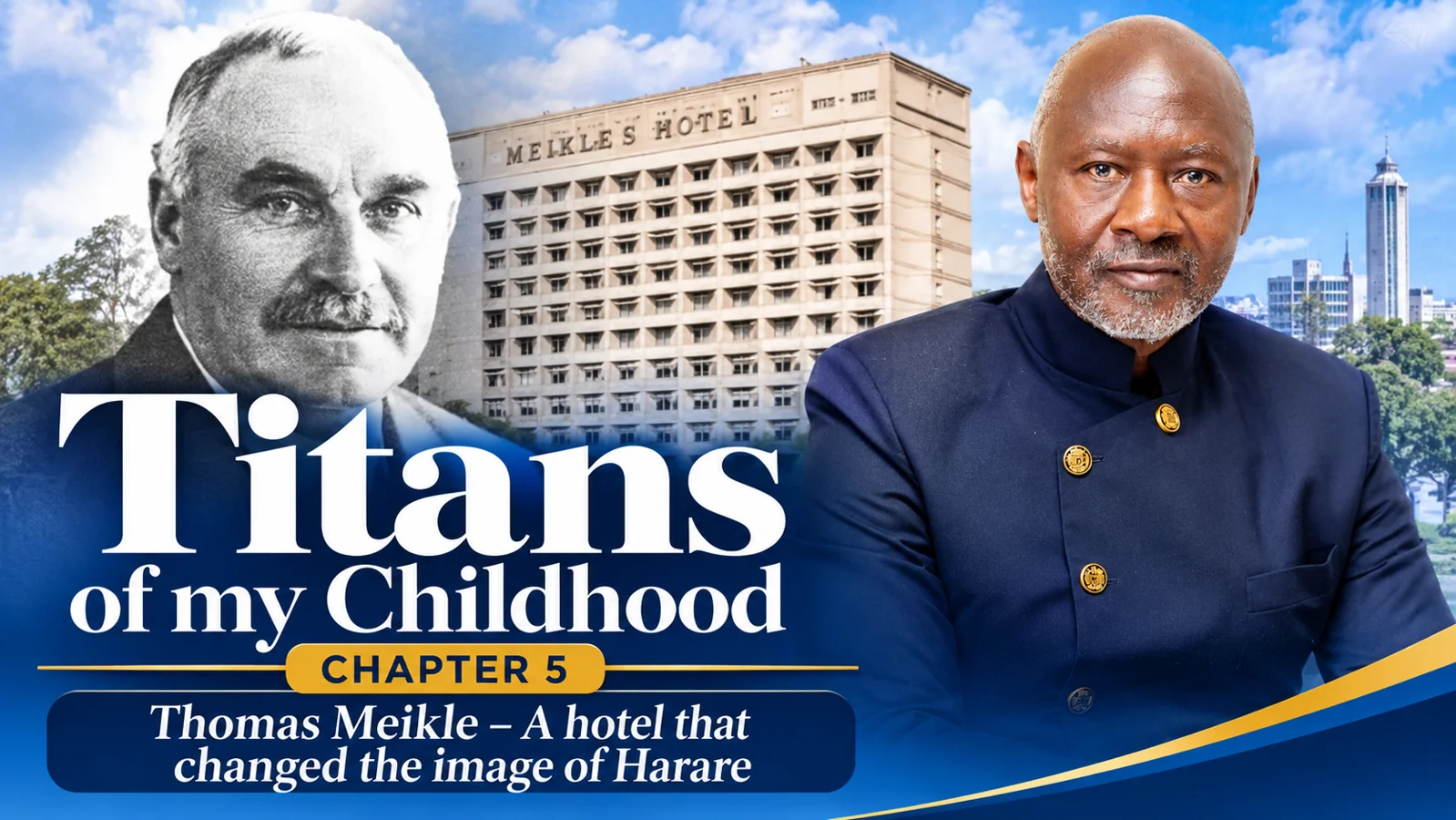
In 1913, Thomas Meikle decided to finally pursue a vision which had originally been birthed by two brothers, him and his late brother, Stewart. Utopian as it was, the vision was to build one of the best hotels at what could be the most expensive square mile in Harare, Cecil Square, now known as Africa Unity Square, in the heart of what was then Salisbury.
It was a bold idea, one that was to change the face of the city forever and earn the man a legendary history, for this vision was to take shape on the citadel of governmental power at that time. Building a hotel of that magnitude in that location was no child’s play. It was a game-changing move that remains so decades after the dream became reality.
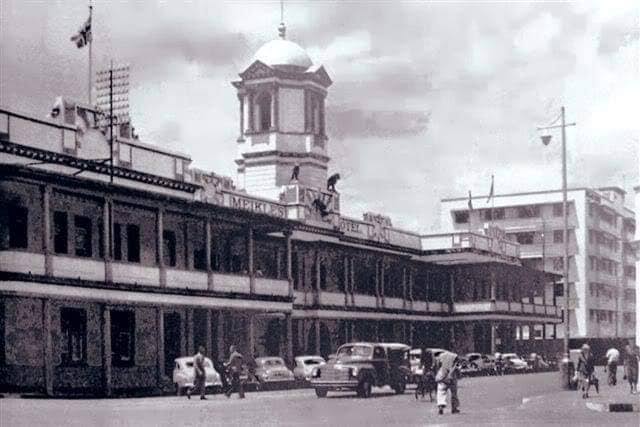
Meikle claimed the heart of the capital itself when, on 5 November 1915, the Meikles Hotel was officially opened. Then, a year later, in 1916, an annex was added, bringing the hotel’s capacity to 160 rooms. He had built what was to instantly become the hotel of Rhodesia, the natural home where top politicians of the then white only government, farmers, miners, explorers and later heads of state would stay in comfort and style while remaining close to the levers of power.
After building the hotel, Thomas maintained his permanent home in Bulawayo but kept an apartment at the hotel for his travels to the capital. Bulawayo was his base. Salisbury was his business frontier. He was a pioneer merchant more than a hotelier, a man who came to Rhodesia in the wake of the Pioneer Column and built a trading empire from nothing, of which the hotel was the crown jewel.
Born on 4 December 1862 in Scotland, Thomas “Tom” Meikle, the founder of this five-star hotel, migrated from Scotland to South Africa as a young man before settling in what was then Rhodesia. During his lifetime, Tom built a legacy which was left in family hands when he died on 8 February 1939, aged 76. His remains are interred at the Mabukuwene National Trust Cemetery, Burnside, Bulawayo, an estate of wonder lying on a granite outcrop under a wild fig tree at Mabukuwene.
Mabukuwene, which means “take note”, is situated a few kilometres from Bulawayo and consists of 12 hectares of indigenous trees and plants set in an unspoilt area of kopjes whose distinctive pink hues distinguish it from other rocky environments in and around Bulawayo. The area is today a tourist resort and a National Trust site, unspoilt and quiet, filled with granite boulders that turn pink at sunset. It is a fitting resting place for a pioneer who loved the Matabeleland landscape. His grave sits alone under the fig tree, on the rock, overlooking the bush he once traversed by ox-drawn wagons.
To understand the hotel, you must understand the brothers, Thomas, John and Stewart Meikle, who all came to Rhodesia in 1892. These three were among the early traders who formed part of Cecil John Rhodes’ colonial occupation in search of wealth.
The brothers opened a shop in Bulawayo, where they settled, trading different wares before spreading their presence across the country to become a chain of stores that later dominated modern-day Zimbabwe. At that time, the brothers were involved in buying and selling everything from blankets to mining equipment. They understood that Rhodesia needed commerce as much as it needed administration. Stewart died before the hotel dream could be realised, but Thomas carried the vision forward. He had seen hotels in South Africa and Britain. He knew Salisbury needed a hotel that matched its ambitions as a capital city.
The site he chose was perfect. Cecil Square was then an open square with trees, flanked by government buildings. It was the first thing any visitor saw when arriving in what was then Salisbury. Meikles Hotel rose on its edge with a colonial grandeur that was new to the country, with wide verandas, a grand dining room and bedrooms that offered something rare in Rhodesia at the time: comfort and luxury in the same breath.
From inception, Meikles Hotel was more than just a hotel; it was a club, a meeting place, a parliament outside parliament. Deals were cut in this place, in its lounge, corridors and private rooms. It was a place where farmers who came to town stayed, politicians held meetings and made pacts. During the Federation years and later during UDI, it was where journalists gathered to get their news. Its bar was famous for being the longest bar in Africa, a place where stories were traded as much as cattle and tobacco.
In 1953, refurbishments were made to the front entrance, hotel foyer and dining room, modernising it for a new post-war era of air travel and international visitors. A new East Wing was constructed over the old hotel’s beautiful garden in 1956 as an addition to the existing hotel. This was completed two years later, in 1958, just in time to accommodate a French rugby team on a visit to the country. The new wing had seven stories with 120 bedrooms, transforming Meikles into a modern high-rise exuding elegance.
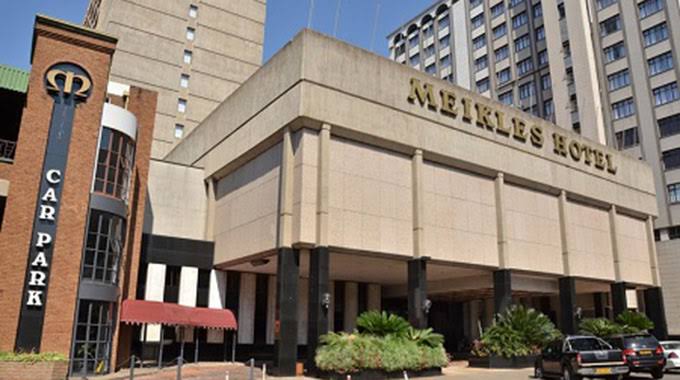
But by the late 1960s, the old structure no longer appeared to meet the stature of the hotel, leading to the 1969 plans to build an entirely new hotel. This took effect in 1974 when the old buildings that Thomas Meikle had built in 1915 were demolished, an emotional moment for old Salisbury hands who had grown up with its verandas and gardens. The new building was opened in November 1976, with Southern Sun Hotel Pvt Ltd taking over the management of the hotel. The new Meikles was a tower of 1970s modernism, with over 300 rooms, rising above Africa Unity Square, still commanding the same site Thomas had chosen in 1913.
Its reputation grew internationally, to the extent that in 1995, Leading Hotels of the World invited Meikles to join its prestigious group, the first hotel in Zimbabwe to be given such notable international acclaim. It placed Meikles among the great hotels of the world, recognised for its service and heritage.
Fast forward to 2013, the hotel underwent a US$9 million upgrade, keeping with its tradition of being a winner. Today, it holds a number of unique African hotel awards for its suites, dining and heritage.
For over a century, Meikles Hotel was the address in Harare. Every head of state who visited Zimbabwe stayed there. Every tourist wanted to see its famous waterfall in the foyer. Every Zimbabwean who could afford it went for high tea or a special dinner there. It survived sanctions, wars, hyperinflation and political upheaval. It remained.
Then came change. In May 2024, Meikles rebranded to Hyatt Regency following a US$20 million takeover by Dubai-based Alwardy Investments. The Meikles family had long sold its interests, and the hotel that had borne their name for 109 years changed its name.
Hyatt Regency is a premier global hotel group, with 200 hotels in more than 40 countries. The brand has been operating for over 60 years and was established by Jay Pritzker an American hotel magnet in 1957. Now, the building on Africa Unity Square flies a new flag: Hyatt Regency Harare The Meikles.
But the founder remains in Bulawayo. Thomas Meikle did not choose to be buried in what was then Salisbury, where his famous hotel stands. He chose Burnside, Bulawayo, on a granite outcrop under a wild fig tree at Mabukuwene, the place of “take note”. Few visitors to the Hyatt Regency know that the man who started it all lies under a tree in the Matobo-like kopjes outside Bulawayo, in 12 hectares of indigenous bush.
His hotel still stands. His grave still watches over the pink granite hills. Both are monuments to a man who came with nothing, built an empire and understood that a country needs a great hotel at its centre.
The Knowledge That Stayed
1. Vision Must Go Beyond Your Lifetime
Vision is for a few, while provision is for many. By this, let me take you past the vision formed in 1913 by two brothers, which is still giving decades later, serving a purpose to many who had not even been born at that time. It is clear to me that the Meikle family did not just want to build a business; they were not just looking to make money. Their investment was forward-looking. It was meant to last beyond their time, and it has. We must learn to look beyond our immediate needs and build with generations yet to come in mind.
2. Build Institutions That Serve Others
The Meikle story reminds us that a great business should do more than generate returns for its owners. It should create value, serve a purpose and make a lasting contribution to the people and places around it. The hotel became a meeting place, a landmark and an important part of Harare’s identity. As we build Nyaradzo, I am motivated to go beyond today and provide an institution that will build hope for the next generation, change lives and motivate others. Our greatest achievement should not only be what we build for ourselves, but what our work makes possible for others.
3. Brands Must Endure
A strong brand is built over time through consistency, quality and the ability to adapt. Meikles Hotel survived generations of change, from its beginnings in 1915 through major refurbishments, reconstruction and, eventually, a change of ownership and identity. Although the name has evolved, the history and significance of the building remain. We must understand that brands must endure beyond their founders and the circumstances of their beginnings. To achieve this, we must build institutions with strong foundations, a clear purpose and the capacity to evolve without losing the value of what they represent.
4 responses
Leave a response
Become part of the circle
Sign in or create a free reader account to leave a comment. Likes and shares are open to everyone.
Read next
Readers are enjoying
Titans of My Childhood · Season 01 · Introduction
Titans of My Childhood: Explained
Titans of My Childhood: Explained

Titans of My Childhood · Season 01 · Chapter 2
Titans of My Childhood, Chapter 2: Isaac Takawira
Titans of My Childhood Chapter 2 – Isaac Takawira: From Barclays to the African Boardroom
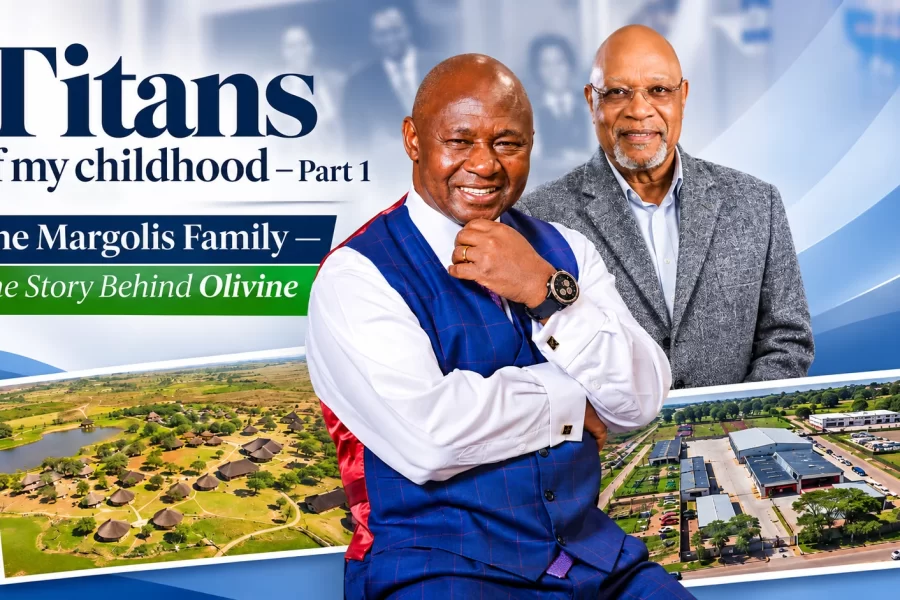
Titans of My Childhood · Season 01 · Chapter 1
Titans of My Childhood, Chapter 1: The Margolis Family
Titans of My Childhood, Chapter 1: The Margolis Family — The Story Behind Olivine
Well said. Brands that endure are those that remain true to their core values while continuously evolving to meet changing customer needs and market conditions.
I applaud the powerful link to Nyaradzo because, you’re saying you don’t just want Nyaradzo to be a funeral company but an institution that builds hope. For the past 25 years, Nyaradzo has changed how many Zimbabweans, local and from afar, bury their loved ones. A brand that is evolving!
Like Thomas Meikle, you want to be remembered not for what you owned but to be remembered for what you built that served others after you’re gone.
It has been rebranded, but it remains the Meikles Hotel to many.
This is rich history Nyati. The legacy lives on and the elegant brand remains embodied today with the infrastructure, that alone is historical.
Yeah! Great lessons. Thank you, sir.