Titans of My Childhood · Season 01 — Titans of My Childhood
Chapter 3
Titans of My Childhood, Chapter 3: Kiki Divaris
Titans of My Childhood, Chapter 3: How Beauty Became an Industry in Zimbabwe – Kiki Divaris
Listen to this article
Read aloud by your device · 9 min read
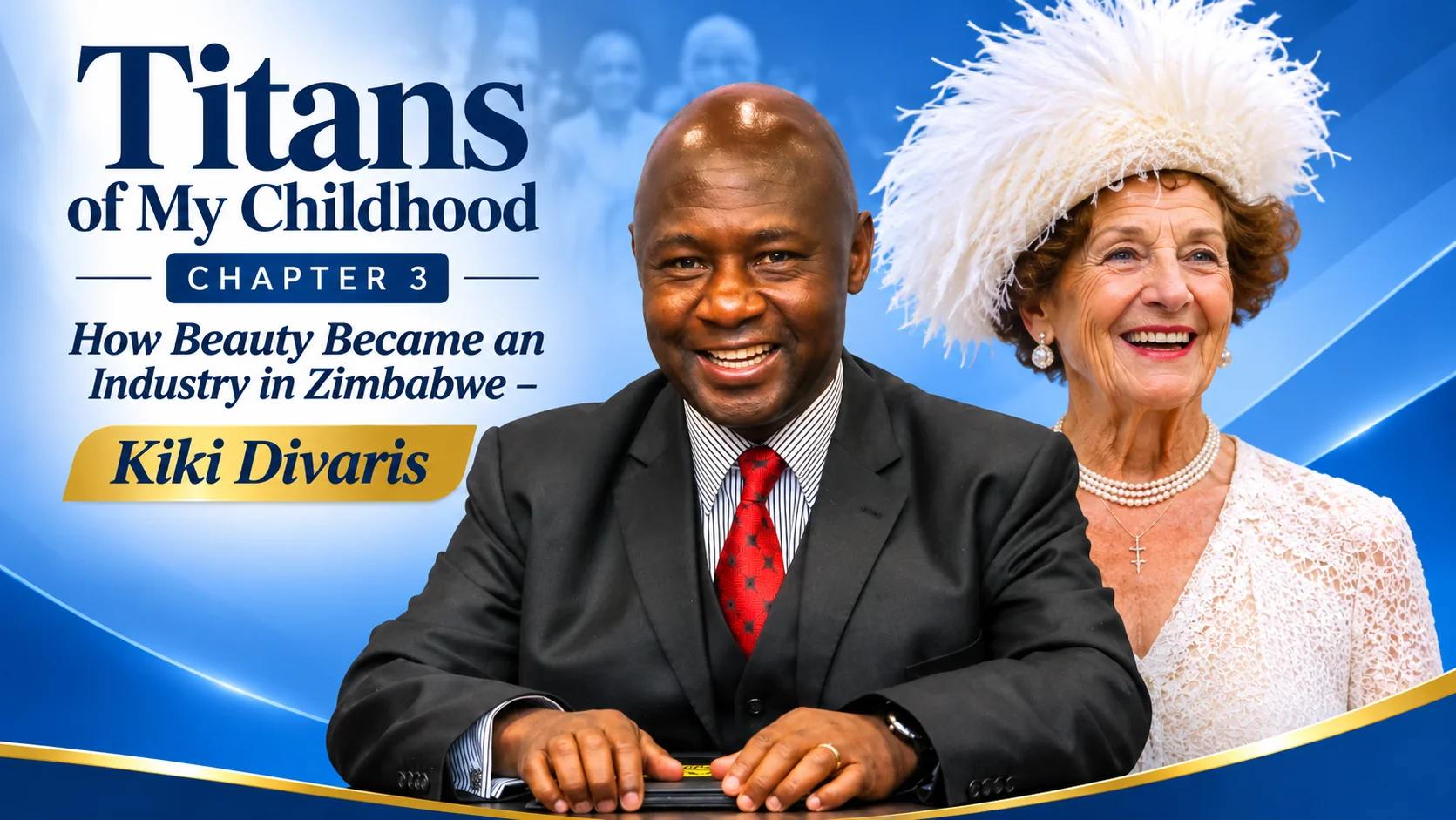
One of the enduring names in Zimbabwe, and indeed in the glamorous industry of beauty and modelling, is that of the legendary Vassiliki Babaletakis Divaris, mostly referred to simply as Kiki. Hers was a name that kept giving and raising Brand Zimbabwe to greater heights.
In this piece, I look at why this woman, who aged with grace, is a Titan of my time and a source of hope to many of you who had the chance to be touched and encouraged by a Kiki who dedicated her life to giving others not just material support, but much, much more – toolkits on how to make it in life. If I am to summarise her life in a few words, I would say she gave glamour to a country that had just gained independence, she gave shelter to the needy, gave dignity to the girl child, and gave her own home when others would only give money.
The question you may ask is how I arrive at this conclusion. Well, it is not possible to answer this question without taking a journey back to 13 September 1924, in Sparta, Greece, where Vassiliki Babaletakis was born, although some records put her birth in 1925. Kiki grew up in Cape Town, South Africa, before moving to Rhodesia as a young Greek bride, who was to be married to Dr Anthony Divaris, a prominent doctor living in Harare at that time. The two settled into the leafy suburbs of Alexandra Park, where they were to raise their two sons, Sotirios and Dimitris, before later being blessed with two grandchildren and two great-grandchildren.
Kiki opened her private home at 68 Churchill Avenue, Alexandra Park, to Zimbabwe and the world, making it a famous address – not for its exclusivity, but for how open it was.
Not one to live a quiet life, the mother of the catwalk was to occupy the public arena in a moment that defined a nation that had just been born from the ashes of a protracted war – a new Zimbabwe, where, in 1980, the country had its first black Miss Zimbabwe, Shirley Nyanyiwa.
Kiki designed the dress that Nyanyiwa wore on the ramp, announcing Kiki’s entrance into this industry through a powerful symbol. A symbol that spoke of breaking racial barriers and making the new path that we were to walk as a people. Just look at it: a Greek white woman who had lived through Rhodesia designing the gown for a black Zimbabwean queen to wear on the world stage. Powerful and lasting to some of us, young enough to understand and comprehend the historic significance. It was then that Kiki entered and never left, creating decades of memories for many in the industry.
Vassiliki Babaletakis Divaris, The Queen Maker, as she was later to be referred to, Kiki spent 30 years as the chairperson of the Miss Zimbabwe Trust, making queens who would represent our country on the world stage. It was during her reign that she carefully and methodically built the pageant, transforming it from a small beauty contest that was once laced with segregation in colonial times into a national institution that embraced young girls from across the country.
Those who worked with Kiki will tell you that she understood what was needed to create a complete model capable of making an impact on the world stage. It was not just facial beauty or perfect body structure; it had to be more than that. Some measure of confidence, mastery of etiquette and knowledge of the trade made a difference. She spent her years at the Trust transferring this knowledge and skill to the young girls for whom she passionately opened doors.
At the heart of what she did was giving rural and urban girls not just a platform, but a breathing chance to change their lives forever. A chance to dream, to hope and to achieve. Veteran Bulawayo model instructor Sarah Mpofu-Sibanda recalled how Kiki believed in her when no one else did. There was one time when the Trust almost failed to host the pageant in Bulawayo, with Sarah as the lead. Kiki was there, pushing and believing. “You can do it,” Kiki is said to have told Sarah, and indeed they did it, hosting the first and only Miss Zimbabwe ever held in Bulawayo. “She was passionate about the industry. She was truly a humble person. She knew the true essence of pageantry,” Mpofu says about Kiki.
In 2013, at the ripe age of 88, she finally handed over the licence for Miss Zimbabwe to Mary Mubaiwa, who herself was once a model groomed by the master, as Kiki retired to become patron.
Following her death in 2015, the new Miss Zimbabwe Trust chairperson, Mary Mubaiwa, was to dedicate the 2016 pageant to the woman who had dedicated her life to beauty. The pageant was held under the theme “Celebrating the life of our icon, Kiki Divaris.” At that time, Mary was to say of Kiki, “She reminds me of the epitome that was Princess Diana and the greatness of Mother Teresa. She gave love and made Zimbabwe a better place to live in.”
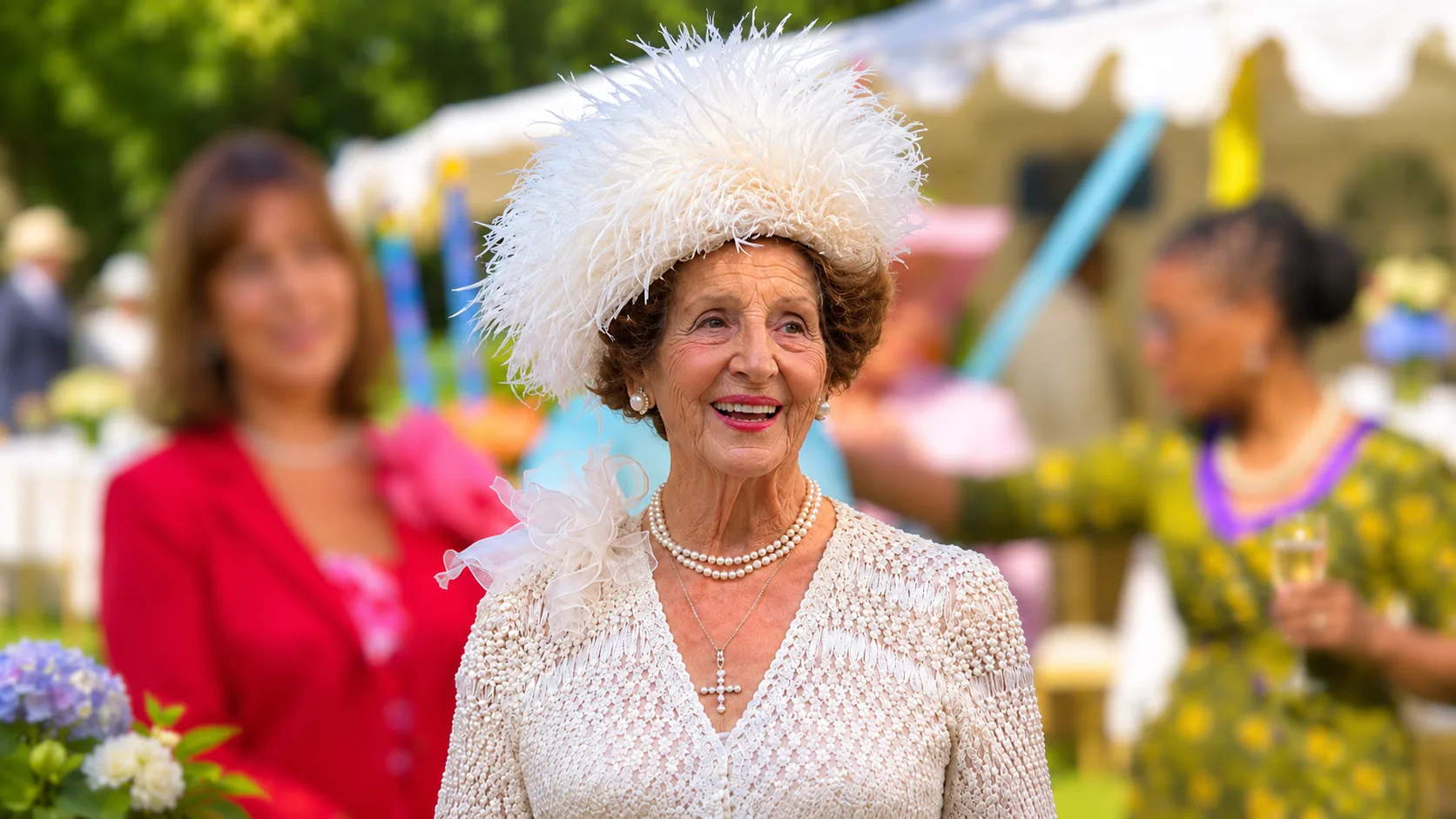
There was another side of this lady, outside modelling, which many might not know.
Kiki was president of the Greek Hellenic Ladies Association, keeping the Greek community together in Harare. More importantly, she worked closely with the late First Lady Amai Sally Mugabe when she was building her network of charities for children and women. As First Lady, Kiki was by Sally’s side.
In her quest to help the underprivileged, Kiki was to become the chairperson of the Child Survival and Development Foundation, which had President Robert Mugabe as its patron. The Queen Maker was also involved with children’s homes, fighting for the rights of girls and gender equality in a country where, at the time, the rights of young girls and women were secondary.
Those who knew her said she gave without accounting. Filmmaker Moses Matanda revealed that when he was making his feature film Chinhoyi 7, which chronicles the 1966 battle that ignited the Second Chimurenga, Kiki offered her own house at 68 Churchill Avenue to depict the mansion of former Rhodesian Prime Minister Ian Douglas Smith. For a month, she housed more than 50 actors and crew, gave them all her bedrooms, including her own, and personally cooked for them. “Cash is not the only form of support,” Matanda said. “Location is very important. She gave our international acts a five-star treatment.”
Her generosity crossed political lines. In her early years in Rhodesia, she had been part of the white establishment but was later to become a staunch Zanu-PF supporter and a close personal friend of the Mugabes, from President Robert Mugabe to both First Ladies, Grace and the late Sally Mugabe. The relationship was deep to the extent that, as President, Mugabe went to the Divaris family home in 2010 to pay his respects upon the death of Kiki’s husband, Dr Anthony Divaris.
Many who knew her knew Kiki was the epitome of elegance and class, which she wore so well in all her public appearances. A top function in Harare for years was never complete without Kiki’s name on the A-listers’ list, to the extent that some once mistook her for the Mayor of Harare.
Her taste in fashion was so trusted in high circles that she was given the responsibility of dressing the wives of top Zimbabwean politicians. A-listers attending charity balls also came to quench their fashion thirst through her expertise. It would be apt to say she dressed a nation trying to find its style after independence.
On 5 December 2015, 72 hours after being admitted to Borrowdale Clinic Trauma Centre for pneumonia, Kiki Divaris died peacefully in her sleep at 02:37. She was 90. The official age was given as 90, although some family records put it at 91. The closure of a legacy was announced by Dimitris, Kiki’s son, in simple but painful words that many Zimbabweans remember even today: “She died peacefully in her sleep,” he said.
The death of this Titan was not only felt by the beauty industry or by Zimbabweans alone. Greece’s Ambassador to Zimbabwe at the time, Leonidas Contovounesios, described Kiki as a bridge between Greece and Zimbabwe. The Modelling Industry Association, which was plunged into mourning, was clear that her death had left an irreplaceable void in the industry. Their spokesperson, Wilbert Rukato, was to say at the time: “The passing of Kiki has left an irreplaceable void as she died before we even grasped her vision and flair.”
The Zimbabwean Government, acting on Zanu-PF’s request, declared her a Liberation heroine, making her the first white woman to be declared a liberation war hero in Zimbabwe. This meant she was granted a state-assisted funeral in recognition of her loyalty and contribution to developing the country before and after independence.
She was laid to rest on Wednesday, 9 December 2015, at Pioneer Cemetery in Mbare, Harare, at 12 noon, next to her husband, Dr Anthony Divaris.
In life, she was accused by some of being contradictory. In death, her contradictions made sense. She was a Greek Spartan who chose Zimbabwe. She was a queen maker who housed 50 struggling actors in her own house. She was a woman who understood that giving is not about what is left over, but about what is in your hand.
Kiki Divaris dedicated her life to giving, and Zimbabwe remembers.
The Wisdom That Stayed
1. Turn your passion into an industry.
I learnt from Kiki that no field is less important than another. What matters is what you choose to do with your talent, knowledge, passion and resources. It is okay if you are not a celebrated medical doctor, a top musician or a top footballer. You can turn your area of expertise, no matter how insignificant others might consider it, into something of national and even international significance. Kiki took fashion and beauty, an industry that many of our parents had once dismissed, and elevated it to national and international levels. She helped transform modelling from a beauty contest into an industry that created opportunities and changed lives. As an entrepreneur, I am reminded that greatness is not necessarily found in choosing the biggest industry, but in making a significant difference in the one you choose.
2. Build people, not just a business.
Kiki understood that her legacy would not be measured by the number of pageants she organised, but by the young women she groomed and the doors she opened for them. She did not simply identify beauty; she developed confidence, discipline, etiquette and the skills required to compete on the world stage. She also believed in others, giving people like Sarah Mpofu-Sibanda the encouragement and opportunity to succeed. This reminds me that a sustainable enterprise must invest in people, transfer knowledge and create opportunities for others to grow. The true measure of leadership is not how indispensable you make yourself, but how many capable people you leave behind.
3. Generosity is also an investment in legacy.
Perhaps one of Kiki’s greatest lessons was that our resources are bigger than money. She gave her home, her time, her influence, her expertise and her networks to causes she believed in. When she opened her home to a film crew of more than 50 people, she demonstrated that sometimes the most valuable contribution we can make is to share what we already have. As an entrepreneur, I have learnt that business is not only about what we accumulate, but also about what we make possible for others. The relationships we build, the lives we touch and the opportunities we create can outlive the businesses we establish. That, to me, is the true meaning of legacy.
2 responses
Leave a response
Become part of the circle
Sign in or create a free reader account to leave a comment. Likes and shares are open to everyone.
Read next
Readers are enjoying

Titans of My Childhood · Season 01 · Introduction
Titans of My Childhood: Explained
Titans of My Childhood: Explained

Titans of My Childhood · Season 01 · Chapter 1
Titans of My Childhood, Chapter 1: The Margolis Family
Titans of My Childhood, Chapter 1: The Margolis Family — The Story Behind Olivine

Season 01 · Chapter 1
What a beautiful tribute and what a beautiful life. What stays with me is not the glamour, but the generosity in her. This line will stay with me, “When she opened her home to a film crew of more than 50 people, she demonstrated that sometimes the most valuable contribution we can make is to share what we already have.”
Kiki was not just brains, she was a shrewd and intentional business woman.
Thank you for acknowledging her contribution to the beauty industry