Chapter 5 · Volume 11
The gentle giant, who knew how to hustle…
Listen to this article
Read aloud by your device · 17 min read
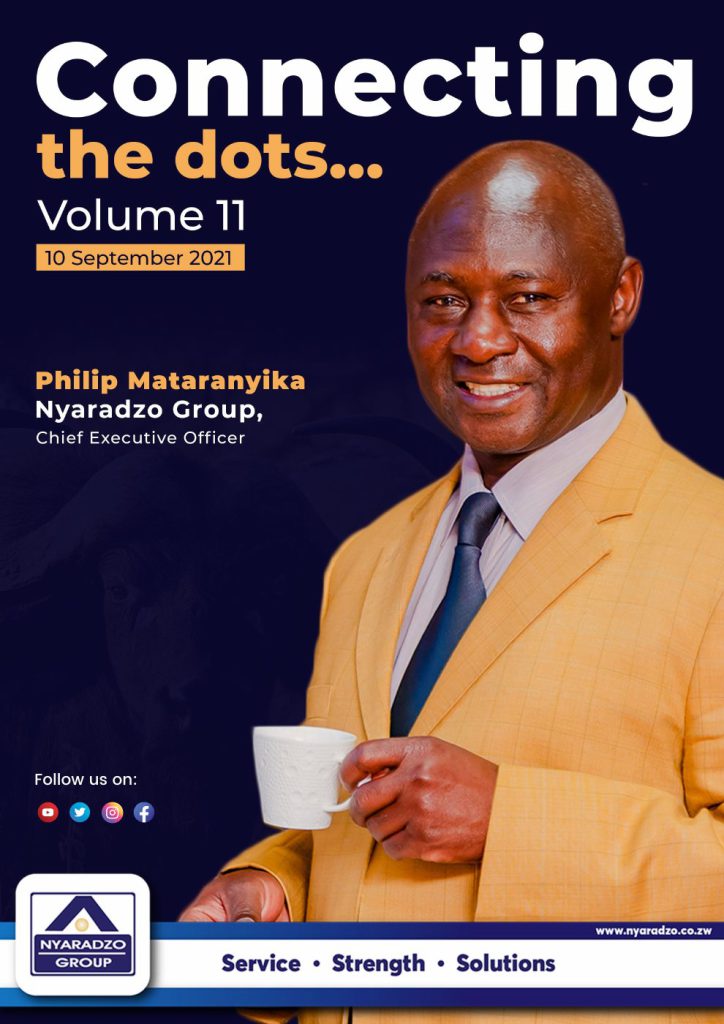
From the time my aunt (Tete) Ziganga prevailed over her half-sister, Masodzi, to leave in her custody one of their late brother’s orphaned children, the older boy, Tongai Mataranyika, who was twelve at the time, Tongai would grow up in stature, age and wisdom under her watchful eye. Most importantly, like Ziganga herself, he would have a heart that was big enough to accommodate all of us. I am as much a product of his magnanimous generosity as any member of his immediate and extended family.
Determined to change his life and that of his siblings for the better, Tongai had gone out of his way to do all he could to first be strong himself, both intellectually and financially. He acquired additional education by sending himself to school from the little savings he had accumulated from the odd menial jobs he did once he left the village, in order to build on the basic education accorded him by his father’s half-sister.
Tete Ziganga’s enterprising youngest son, Aaron Kaisi, had also done his bit, giving Tongai a job at his then flourishing tea and coffee shop in Nyazura as well as teaching him to drive which would be the foundation upon which he built his own financial wellbeing and would enable him to become a pillar of support for the rest of the family. When the good fortune of Aaron’s business went into a decline, Tongai could not afford to go down with it since he knew he had several mouths to feed. His desperate search for the proverbial greener pastures would take him to the then United Kingdom based, Clan Transport, which had been established in the country a few years earlier.
Having secured a job at Clan Transport as one of the earliest cross-border drivers in the country at the time, Tongai’s job included taking deliveries to what was then called Nyasaland, now Malawi through the Nyamapanda Border Post, which is one of the eight check points the country has with its neighbours; South Africa to the south, Botswana to the south-west, Zambia to the north, and Mozambique to the east.
One of the things Aaron must have taught his cousin well, was to be enterprising, which today’s youth refer to as “hustling.” Or could it be, that given the burden he carried on his shoulders, that of looking after his siblings, Tongai had long figured out that he needed extra income to support his extended family.
Inspired by the entrepreneurial instincts of his cousin, mentor and boss, Aaron, Tongai was quick to realise that there was a huge market in his home country for dried, salted fish from Lake Malawi. The product, which is still popular with the locals, is commonly known as Bakayawu – an adulteration of the word Bacalhau which originated in Portugal.
In Portuguese, Bacalhau means codfish, although bacalhau commonly refers to a variety of dishes that are prepared with codfish, or salted cod, as the main ingredient. For centuries, Bakayawu has been one of the main sources of protein and vitamins for the rural and urban folk because it is more affordable than meat. It is also a rich source of calcium and minerals such as iron, zinc, iodine, magnesium and potassium.
Tongai must have realised that his job at Clan Transport meant that he would be able to land the white meat cheaply in Southern Rhodesia (now Zimbabwe) as he would be in a position to cut out the middlemen and wouldn’t be incurring transport costs. On his many trips to Malawi, he would take blue soap with him, “Baka”, they called it, which was in short supply in the north-eastern country – using the detergent as a currency for purchasing dried fish. Some of his customers would pay him in cash for the soap upon delivery, whilst others would barter the product for dried fish, which was all good for Tongai since there was a thriving market for Bakayawu back home.
Times must have been good for him given there were close fraternal ties between Zambia, Zimbabwe and Malawi even as far back as then. In 1953, the three countries became one in the Federation of Rhodesia and Nyasaland. The Union lasting until 1963 when the movement towards black majority rule in both Zambia 1964 and Malawi 1964 rendered a death nail to the union. On one of his many trips to Malawi, Tongai would be introduced to Laina Zvomuya, a pretty girl when he had a stopover in Mrewa. This marked the beginning of a courtship which resulted in the lovebirds getting married in 1955.
In July of 1957, the couple would be blessed with their first child, a girl whom they named Chipo Charity. A boy child would follow in April 1960 and they called him Blessing. Media was born in 1963, Amos in March 1965, Misheck Dudzai in July 1967 and Farayi Matthew in 1969.
Once he got married and started a family, Tongai would find his job a bit taxing as it took him away from his young family for days and sometimes weeks on end. Even though it gave him a good wage and huge opportunities for his side hustles, Tongai wanted a job that would afford him more time with his family, while still enabling him to moonlight in order to supplement his income. And so, when a friend of his – Paul Matambanadzo – started a rural passenger carrier company, Matambanadzo Bus Service, Tongai didn’t bat an eyelid as he jumped ship to join Paul, as one of his pioneering bus drivers. Given their closeness, Tongai would have the freedom to cherry-pick routes to service, albeit with an element of self-interest.
Tongai must have met Paul either when he was doing errands for his cousin, Aaron, or when he was working for Clan Transport, as his job would take him to all corners of the country. Born in 1936 at Domboshawa in Goromonzi, Paul had attained his basic education at Chiutsa Primary School in Mt Darwin from 1955 to 1956. He then worked as a bus conductor for Maziveyi Bus Service which later became K & S Bus Service after independence. Paul had also worked as a bus driver for the same operator before he raised enough funds to branch out and become his own boss.
In 1958, he was granted a permit to operate a bus service servicing the Hartley (now Chegutu), Sinoia (now Chinhoyi) and Sipolilo (now Guruve) route. After overcoming financial hurdles of raising start-up capital, Paul had bought his first bus which he drove himself. Using profits from this new venture, he acquired a second bus, before expanding the fleet to seventy five buses and sixteen goods transport vehicles. Paul also owned Matambanadzo Stores in Sipolilo and Mt Darwin as well as another bus service called Mafenyatsela Bus Services which operated in Botswana.
With all these achievements under Paul’s belt, it was not surprising that Tongai took the risk of abandoning a corporate job to join a family-run business as a bus driver. Like most, if not all rural passenger carriers, Matambanadzo buses were famed for their slogan and tagline “Zvina Mazuva Imbwa ya- VaKachuta”, which was used to popularise and connect the brand with its customers as it permanently stayed in one’s mind. The slogan and tagline was adopted from the lexicon in Dande Valley where a village head by the name of Kachuta was said to have named his dog Zvina Mazuva, which meant “it all depends.”
Fascinated by both the dog’s name and that of its owner, Paul – who had attained his basic education in the region before operating in the same area as a bus conductor and later on as a bus driver – tweaked the names in order to come up with a catchphrase that captured the imagination of his customers.
For good reason, which I will explain shortly, Tongai would choose the Harare-Chirumhanzu route ahead of Domboshava, Mvurwi, Chipuriro-Masembura and Chiweshe, which were some of the routes served by Matambanadzo Bus Service. Given that Tongai had always been discontent with one source of income, he would soon be on the lookout for side hustles to supplement his income. After a few trips and scanning his new environment for opportunities, he quickly identified three commodities that were popular with his new market and would generate additional revenue for him, namely tobacco, green mealies and empty drums.
Given he was the driver of the bus, Tongai would ferry his goods along with his passengers’ loads, almost the same way as he had done while working for Clan Transport. Because he didn’t incur transport costs, his margins were quite attractive. He would drop off his passengers at their respective drop-off points and sleep over at his final destination in Chirumhanzu. The following day, he would pick up passengers wanting to go to Harare and others along the way in Mvuma, Chivhu and Beatrice.
Once he knew what it was his market wanted for his side hustle, Tongai would identify source markets for the products. From Shamva where commercial farmers had a thriving irrigated maize crop that matured early and way before farmers in other regions had crops on their fields, Tongai bought green mealies for resale.
Tycoon Tony Taberer’s Tabex (now Dimon Tobacco Company) was his supplier for the golden leaf, which he would trade at jaw-dropping margins. As a historical fact, Tabex was founded by Gregory Salzman before Taberer, who also owned Leopard Rock Hotel in Vumba, took over and rebranded it Tabex. Tony assisted by his father Charles had acquired the British owned company as most British companies were leaving Rhodesia after the imposition of the United Nations sanctioned punitive measures on the rebel government of Ian Douglas Smith after their declaration of UDI (Unilateral Declaration of Independence) in November 1965.
Tony saw this as an opportunity to have a firm base in the then Rhodesia, that would catapult his company into other tobacco markets and by the time his tobacco empire was sold in (1997), the Tabex/Intabex Group was the fourth largest leaf tobacco merchant in the world with an annual turnover of US$800 million, 5000 employees and operations in 32 countries. For all his hard work and troubles, Tony had been voted World Tobacco Man of the Year in the mid 80`s. From CAPS Pharmaceuticals – founded in 1953 – Tongai would buy empty drums for resale to villagers who wanted to use them for multi-purposes which included storing water or making kitchen utensils such as pots and pans.
Tongai would hire a truck to ferry his green mealies from Shamva. The same truck would pass through CAPS Pharmaceuticals and Tabex collecting empty drums and dry tobacco leaves, respectively, all of which he kept at his Highfield home. From the main bus terminus of Mbare Musika, he would pass through his house (No 2195, Egypt, Highfield) to collect his wares on his way to Chirumhanzu. Because there was so much demand for tobacco, green mealies and empty drums in Chivhu, Mvuma and Chirumhanzu, Tongai would employ three people in each of these areas to act as vendors for his products. On his way to his final destination, he would leave stock with all three of his vendors for resale – collecting the takings on his return journey.
Having generated significant savings from his employment as well as his side hustle, Tongai would establish a general dealer’s shop in Enkeldoorn (Chivhu), employing a number of youths, including Austin Chinyama, John Makoni Mataranyika, Divas Mataranyika, Julia Mukoyi, Clara Mataranyika and Elisha Kaisi, his nephew and also the son of Aaron, his cousin and benefactor, among others. As an absentee business owner, Tongai must have found it tough running a proper business which was totally different from the side hustles he was used to which depended solely on him for success. When he found the going tough, Tongai would be prudent enough to cut his losses and continue as a bus driver, as well as his side hustle.
Most bus drivers back then, had mutually beneficial arrangements with shop owners on their routes as well as at their destination, with drivers stopping along the way to allow their passengers to do last minute shopping, while they got food. Tongai would have similar arrangements with shop owners along his route all the way to his destination of Chirumhanzu, getting food as well as accommodation in exchange for allowing his passengers to do their shopping.
For those shops that were located in isolated places, passengers travelling on the buses were the main source of business in these mutually beneficial relationships.
The period preceding Zimbabwe’s independence was such a precarious period for rural transport operators, their drivers and conductors. During the war for our independence, most people who worked and commuted between rural and urban areas were at risk of being accused of being sellouts, either by the guerrilla fighters or soldiers from the Rhodesian Front. Being labelled a sell-out carried the risk of being killed. In some cases, freedom fighters prohibited the movement of people between rural and urban areas, which would substantially increase the risk for those who dared to ignore their directives.
Tongai would continue being a bus driver, plying his route and serving his customers all the way into independence. With time, his clients would include the guerrillas fighting in the war for our independence, whom he supplied with food, clothing, shoes and medicines, making him a vital cog in the materials supply chain. The empty drums he bought from CAPS became more than just a side hustle as he used them to hide supplies of his valued clients, the comrades, without raising any suspicion at check-points since the Rhodesian Police, (BSAP) were now accustomed to his side hustles.
Luck also had something to do with it, as other drivers were made examples of after they were caught delivering provisions for the guerrilla fighters. An incident that could have scared the daylights out of all drivers whose duties took them to rural areas at the time, occurred in 1973, when a group of eight Zimbabwe African National Liberation Army (ZANLA) forces hijacked a Maziveyi bus in the Dande area before it was burnt to ashes as punishment for ignoring warnings not to come into the area.
Besides the dangers of his job, driving in and out of the rural areas during the days of our liberation war, Tongai’s job and side hustle made him enough money that he was able to buy his first car, a Peugeot 403 bakkie. Instead of hiring trucks to go shopping around collecting his wares, he now used his own vehicle, a bakkie, making life a lot easier for him. Given that Tongai was always on the move and spent much of his time away from home, he would start a relationship with Esther Piki of the Soko totem with whom he had a son, Silas, born in December 1966.
The couple would be married, enjoying marital bliss for a few years, before Tongai, in 1968 brought home then pregnant, Celea Mugozhi, of the Nhire totem whom he said was to be his third wife. Finding it unacceptable, Esther would pack her bags leaving the brief union, paving the way for Tongai’s marriage to Celea. In November 1968, Celea would give birth to their first child, a son whom they named Taurai Frank, followed by a daughter, born in February 1971, whom they named Cecilia. In May 1974 the couple would welcome their third child, a son whom they named Togarepi Fanuel.
While all this was happening, Tongai would decide to bring his mother, Sophia Madigiri, back to our village from her Chinyama family home in the then Chiduku Tribal Trust Lands where she had withdrawn to, following the death of her husband, my grandfather, Kurauone Kurai Mazikana Mataranyika. Just like Tete Masodzi before him, Tongai had to open another chapter of negotiations with his maternal relatives, this time for the return of his mother. His maternal relatives would ask that he settle his father’s outstanding bride price (lobola) before they would allow their daughter to go back to the Mataranyika family, which he did. Mbuya Sophia’s return would motivate Tongai to build a home for his mother, a two-bedroomed house and round hut located within the yard of his family home used by his wife, Laina and their children.
As his family responsibilities grew, and inspired by Paul and Aaron’s successes and also wanting to prove that his failure in business in Enkeldoorn was just a fluke, Tongai started dreaming big. By 1979, he must have been restless, yearning for new challenges and to follow in the footsteps of his boss, friend and mentor, Paul. I find it easy to imagine what he must have felt in terms of having a vision to grow from strength to strength in his area of expertise and interest. His break, to have another dance with organised retail business would come in 1979 when his cousin, Matthew Chabarwachii Mataranyika, offered to sell him his grocery shop near Maworesa Shopping Centre, so named because there was a prominent shop within the vicinity by the same name.
There was some history to the convenience store! Back in the day, there was a Jewish trader by the name Margolis, who was into buying and selling groundnuts in the Nyazura area, as well as being a tobacco merchant. Margolis had built a grocery shop near the Maworesa shop, to which his groundnut outgrower clients delivered their produce.
Because some of his customers came from far and would not be able to go back home after being served late, Margolis had put up a number of outbuildings behind his grocer’s shop in which his customers would put up for the night.
In the early seventies, Margolis had sold his shop to Naboth Gandanzara, a descendant of Mswati, who later became Chief Makoni. However, at the height of the liberation war in 1976, Naboth had divested from the business, selling it to Matthew Chabarwachii, his cousin and also my uncle’s cousin. When Matthew Chabarwachii got an opportunity to own and run a new grocery shop in Mutare, Goodhope Enterprises, he decided to sell his Maworesa store to his cousin, Tongai in 1979. As fate would have it, right at the time when Matthew was considering divesting from the Maworesa grocer’s shop business, the two of them would have a chance meeting at St Paul’s United Methodist Church in Mbare. A close relative, Modercai Kaisi was giving the hand of his daughter, Margaret in marriage to Titus Mafemba of the Gushungo totem and the two of them were invited guests, resulting in their chance meeting.
As the wedding progressed, the two cousins would find a quiet place to talk business and other family related issues away from the revellers. It is then, that Matthew proposed to sell his grocery shop to Tongai. When Tongai pointed out that he didn’t have enough money to conclude the deal, Matthew would have none of it, proposing instead that his cousin pay him in instalments over five years, resulting in Tongai accepting the offer, prompting Matthew to remark that it was always his intention to keep family assets running within the family. The deal was a lock, stock and barrel transaction whereby Tongai took over everything, including stocks and goods that were on the shelves, which allowed him to trade right from day one of sealing the deal.
Tongai would assign his second wife to run the business while continuing to serve his employer and friend, Paul. By 1979, when he finalised the deal with his cousin, it was twenty years since he had joined Paul at Matambanadzo Bus Service, so he didn’t want to pull the plug without giving his friend and employer, sufficient notice to allow for a smooth handover, which he considered critical to minimise disruptions. Shortly after independence in 1980 and once Paul had found a suitable replacement for him, Tongai would leave his employment, and head for the village for good.
The decision to quit his job was timely. In fact, there was a method to the “madness,” as the sages say. At the time, the emerging black-majority government had established a military camp, 3.2 Infantry Battalion at Romsley, about five kilometres from Tongai’s grocery shop as part of the demobilisation of members of the three forces, namely ZANLA, the Zimbabwe African National Liberation Army, ZIPRA, the Zimbabwe People’s Revolutionary Army and RF the Rhodesian Front, which had been merged into one united force, The Zimbabwe National Army.
The massive camp became a huge market for Tongai’s grocery shop, while the local village became a perfect hunting ground for militarymen who courted women from the village. When some of these courtships resulted in marriages, it exerted pressure on the newlyweds to find alternative accommodation away from the military camp and the women’s parents homes. Tongai was able to see the need for the provision of alternative accommodation, renovating the now dilapidated outbuildings that once served as accommodation for Margolis’ customers, into lodgings for his militarymen customers together with their wives.
When more militarymen came calling, Tongai would put up more structures, to accommodate them, together with their families. Unbeknown to him, he was already into the business of real estate, which was also feeding into his grocery shop. Similarly, without being conscious of the fact, I had already embarked on practical lessons in entrepreneurship through working for my uncle for a few months in 1981, before deciding to go back to Harare.
Once back in Highfield, Harare, I would find work at building contractors, John Sisk and Son, as a builder’s assistant. There, I would be thrown into the deep-end, cutting my teeth in the building profession as part of the team that was responsible for the construction of the Mathematics and Computer Science blocks at the University of Zimbabwe.
Farfetched as it seemed at that time, it was then that I vowed to one day make it to an institution of higher learning such as a University, to further my studies. Lessons derived from my invaluable experience with the gentle giant that knew how to hustle, have carried me through my own entrepreneurial personal journey thus far, and I remain grateful.
Read next
Readers are enjoying
Titans of My Childhood · Season 01 · Introduction
Titans of My Childhood: Explained
Titans of My Childhood: Explained

Titans of My Childhood · Season 01 · Chapter 2
Titans of My Childhood, Chapter 2: Isaac Takawira
Titans of My Childhood Chapter 2 – Isaac Takawira: From Barclays to the African Boardroom

Titans of My Childhood · Season 01 · Chapter 1
Titans of My Childhood, Chapter 1: The Margolis Family
Titans of My Childhood, Chapter 1: The Margolis Family — The Story Behind Olivine