Titans of My Childhood · Season 01 — Titans of My Childhood
Chapter 4
Titans of My Childhood, Chapter 4: Alex Mashamhanda
Titans of My Childhood, Chapter 4: Alex Mashamhanda – Banking, Books and Beats Building a Legacy
Listen to this article
Read aloud by your device · 8 min read

For many, especially the young and outgoing, the name Mashwede immediately brings to mind the massive entertainment hub lighting up Glen View with music, food and a bustling nightlife. On any given weekend, the place throbs with revellers, DJs, braai smoke and bottles clinking. It has become one of Harare’s go-to entertainment destinations, a landmark that defines modern urban leisure.
Very few, however, will immediately link the establishment to Alex Mashamhanda, an unassuming business giant whose story began long before the neon lights, the extensive network of fuel stations and his interests in real estate. What many may not know is that he cut his business teeth selling knowledge, not beats. He established M & H Book Suppliers, with humble bookshops quietly dotted across Zimbabwe, laying the foundation for a business journey that has since moved far beyond textbooks.
It is a classic Zimbabwean story of starting small and thinking big, of moving from the classroom to the boardroom without losing the discipline of the village.
Born in Chivi 75 years ago, Mashamhanda laid his first bricks at St Simon Zhara Primary School before proceeding to Berejena Mission for his secondary education. Those early mission school years instilled in him structure and faith, two values that would later anchor his business journey.
As a young adult, Mashamhanda went on to study Local Governance at Domboshava Training Centre, a qualification that gave him an understanding of how communities and local authorities operate. He subsequently entered the banking industry, first at Barclays and later at Zimbank, where he rose through the ranks to become a branch manager.
It was during this period that he developed the discipline that would become a defining feature of his business philosophy: never spend money that is not yours. Banking sharpened his attention to detail, strengthened his understanding of numbers and, most importantly, taught him how money moves and grows. It also exposed him to risk management, compliance, customer trust and the importance of maintaining clean books of accounts.
In conversation, he maintains that there was no better Master of Business Administration (MBA) than the practical education he received working in the banking industry.
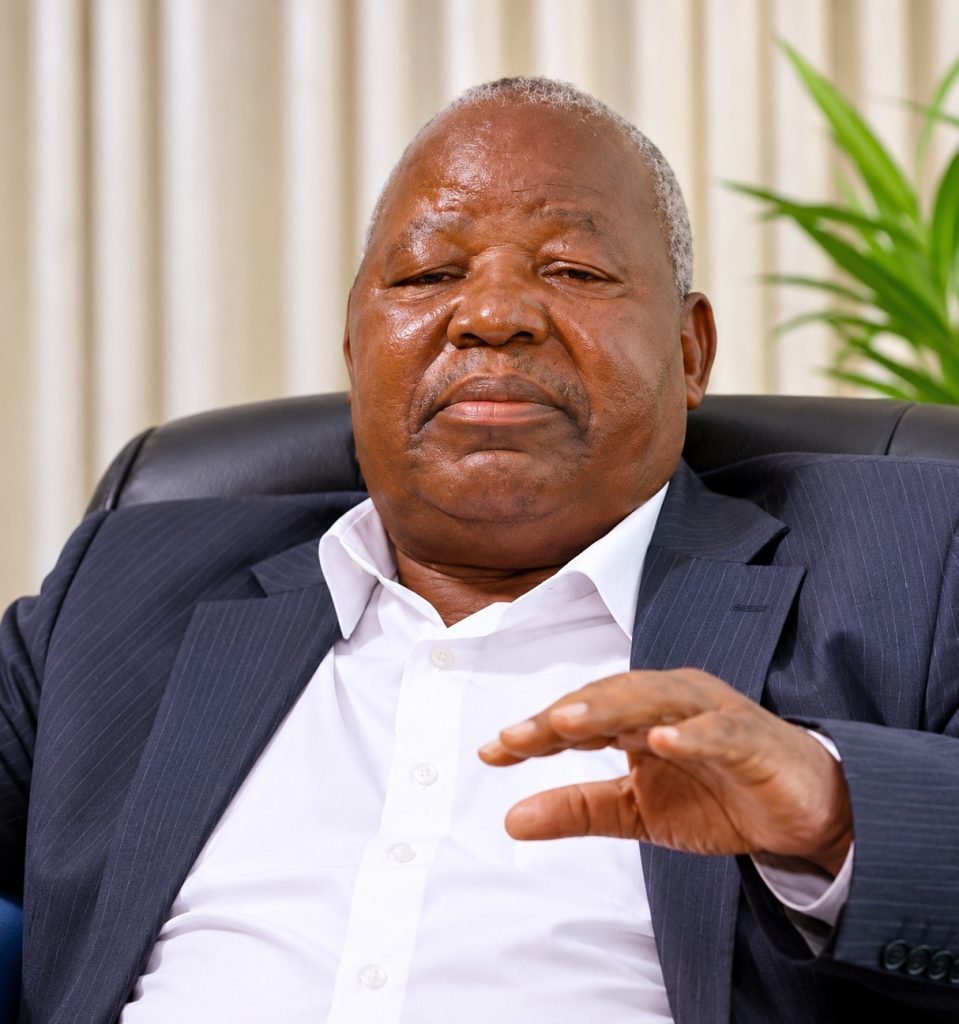
Despite his success in banking, Mashamhanda wanted more. He eventually took the leap and launched M & H Educational Supplies in the 1990s. Many would have clung to the security of a bank manager’s salary, but Mashamhanda chose the uncertain path of entrepreneurship.
A small shop at Suswe Business Centre in Mutoko became the spark. Mutoko is not Harare; it is a rural growth point where margins are thin and customers understand the value of every dollar. Surviving there meant developing a business model that could withstand almost any market.
The hustle grew. From one shop came another, and then another. M & H Book Suppliers spread to towns across the country, supplying schools, colleges and government departments with textbooks, stationery and educational materials at a time when Zimbabwe’s education system was the pride of Africa.
By 1997, the business had grown sufficiently for Mashamhanda to venture into Corporate Social Responsibility programmes. And what better way to give back than to invest in the very community that had contributed to his success: schools?
He sponsored the M & H National Under-17 Soccer Tournaments for 14 consecutive years. That was no small feat. For 14 years, some of the country’s finest young football talent, many of whom would go on to wear the National Warriors jersey, passed through a tournament funded by a bookseller from Chivi.
It was his way of investing in young people long before corporate social responsibility became fashionable.
The book business provided him with steady cash flows, networks and opportunities in property. He reinvested his earnings, and those years of disciplined reinvestment helped build what is today Mashwede Holdings.
The group has interests spanning property, fuel, liquefied petroleum gas (LPG), entertainment and commodities. Its operations are managed from Mashwede Towers in Arcadia, with a workforce of more than 600 full-time employees. What began with textbooks has evolved into a diversified businesses group.
Mashwede is not simply a name pulled out of thin air. It is a family legacy. The first part of the name, “Mash”, comes from his father’s name, Mashamhanda, while “wede” is drawn from his grandfather’s name, Hwede. It is more than a brand; it is an expression of ancestry. Every time the lights come on at Mashwede Village in Glen View, they honour two generations whose legacy stretches beyond their own lifetimes.
Mashwede Village itself is the crown jewel of the business. It draws revellers from Harare’s leafy suburbs and high-density communities alike, and has become a popular entertainment destination, particularly on Sundays. Where others saw a high-density suburb with limited spending power, Mashamhanda saw volume, energy and an underserved market hungry for quality entertainment.
He built a hub that brings together food courts, bars, conference facilities and open-air stages, creating an ecosystem where families can dine, corporates can meet and musicians can draw large crowds. It has contributed to Glen View’s economic activity while giving Harare a distinctive new nightlife identity.
A man deeply rooted in his past, Mashamhanda has not allowed success to cloud his memory of where he comes from. In Chivi, he built a three-storey, seven-en-suite-bedroom mansion valued at US$850,000. According to Mashamhanda, this is not an attempt to show off, but rather a statement that success can find its way back to the village.
The mansion stands tall in Sese, a visible reminder to young people in Chivi that one can leave home, work hard, succeed and return with something meaningful to show for it.
His commitment to Sese goes beyond the construction of a mansion. He invested US$150,000 in bringing potable water and electricity to his community, including Danhamombe High School, St Simon Zhara Primary School and Chikore Primary School, institutions connected to the very environment that shaped him.
The investment has also transformed the lives of more than 20 families, who now have access to piped water and irrigation facilities.
The significance of this investment goes beyond infrastructure. When schools have electricity, children can study at night. When households have running water, mothers and other family members save hours that would otherwise be spent walking long distances to fetch it. Those hours can be redirected towards education, productive activities and improving household livelihoods.
He has also established scholarship opportunities for vulnerable children, extending his investment in the community to the next generation.
His business philosophy is equally generational. Two of his sons are already directors at Mashwede Holdings, demonstrating that he is building for generations, not just for the present. He is not simply building a one-man empire; he is laying the foundation for a family institution, much like the Richards of N. Richards or the founders of Innscor.

The banking discipline remains evident in his approach: systems, succession and sustainability.
Those close to him affectionately call him Dr Mash. The title is honorary but fitting: a doctor of hustle, of turning pages into property. He is married with two children, maintains a low profile despite the visibility of the brand he has built, and still speaks like the banker who knows the value of counting every cent.
From a banker’s desk to boardroom tables, from selling textbooks in Mutoko to owning towers in Arcadia and a village that never sleeps in Glen View, Alex Mashamhanda’s journey offers a powerful lesson: start humbly, remain disciplined and invest in yourself and your vision.
He did not start with music. He started with books. The beats came later, powered by the business of knowledge.
Mashamhanda’s discipline and ability to reinvest in his business are qualities that many entrepreneurs struggle to practise consistently. It is true that businesses are established to generate wealth and improve the lives of their owners. Nobody goes into business intending to remain poor. However, if a business is expected to take care of you, you must also take care of it.
Reinvestment is essential to keeping a business viable and strong enough to sustain its operations and the people who depend on it. Human resources are not simply numbers on a payroll. Employees have families, responsibilities and livelihoods that depend on the continued health of the business. Building a workforce of more than 600 people is no small achievement; it is a life-changing contribution to hundreds of households.
Business must also play its part in the communities that sustain it. A bookseller recognising that schools have contributed to his success and returning to those same communities to invest in young talent is more than a bold gesture. It is the right thing to do.
In many parts of the world, communities have come to understand that they will increasingly spend their money with businesses that demonstrate genuine care for them. Success, therefore, is not measured only by what a business accumulates, but also by what it gives back and the lives it touches along the way.
THE WISDOM THAT STAYED
1. Build with discipline, not just ambition.
Success is not simply about making money; it is about managing it wisely. Mashamhanda’s banking background and commitment to reinvestment demonstrate that sustainable businesses are built through financial discipline, sound systems and the patience to grow.
2. Never forget the community that helped you rise.
The true measure of success extends beyond personal wealth. Investing in schools, young talent, infrastructure and opportunities for others ensures that success becomes meaningful to more than just its owner.
3. Build something that outlives you.
A lasting legacy is not merely what one accumulates in a lifetime, but what one prepares the next generation to carry forward. Through succession planning, family involvement and investment in people, Mashamhanda demonstrates the importance of building institutions that can endure.
3 responses
Leave a response
Become part of the circle
Sign in or create a free reader account to leave a comment. Likes and shares are open to everyone.
Read next
Readers are enjoying

Titans of My Childhood · Season 01 · Introduction
Titans of My Childhood: Explained
Titans of My Childhood: Explained

Titans of My Childhood · Season 01 · Chapter 2
Titans of My Childhood, Chapter 2: Isaac Takawira
Titans of My Childhood Chapter 2 – Isaac Takawira: From Barclays to the African Boardroom

Titans of My Childhood · Season 01 · Chapter 1
Titans of My Childhood, Chapter 1: The Margolis Family
Titans of My Childhood, Chapter 1: The Margolis Family — The Story Behind Olivine
Thank you Sir. My hope and prayer is one day to leave behind a legacy built on sheer determination. Sometimes getting to know how people grew from humble beginnings to where they are it gives hope that in everything if you put your heart and time there’s always a result. Thank you unleashing such opportunities to me and others
Thank you very much, sir!
Thank you, Sir.
Please do keep on sharing these life changing nuggets. They are more than just beautiful stories. They are equipping, enlightening, and insightful!