Chapter 1 · Volume 24
The story of my father and I
One Friday, we had a heated argument and fought viciously, on the Monday we made peace and hugged, by end of day on the Tuesday, he was gone!
Listen to this article
Read aloud by your device · 11 min read
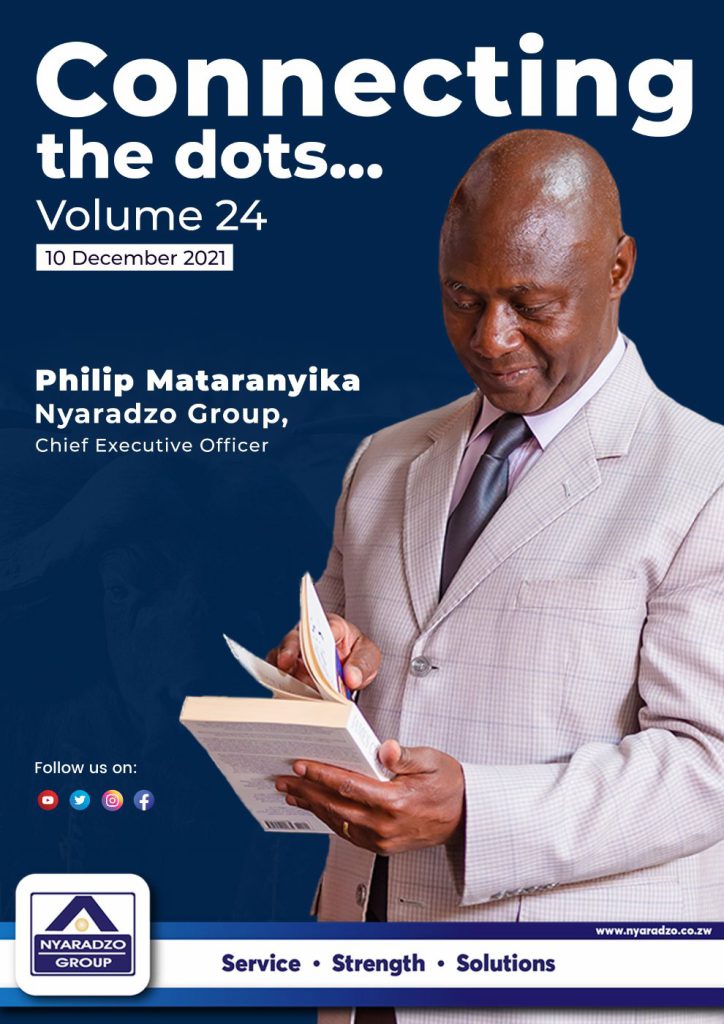
The 31st of August 1982 will forever be marked as one of the saddest days of my life and that of my siblings, as well as the extended Mataranyika family, for this was the day we received the devastating news, of the sudden death of my father, Steven Tapfumaneyi Mataranyika, at a relatively young age of forty seven.
Father’s promotion to glory left our family nucleus distraught and shattered, as it was the second time the grim reaper had stealthily visited our family inside twenty years; the first being when he took my young brother Revai, in his infancy, in the late 1960s.
My Father’s death was particularly painful for me, as we had become embroiled in a heated argument on the preceding Friday the 27th, which went on for what seemed like eternity. The altercation had broken out unexpectedly after I had routinely asked him for money for my upkeep. Unbeknown to me, Father had other ideas with regards to how I was spending my day time in Highfield. He was therefore, not interested in indulging, in his own words, “do-nothing loafers”, whose time could be better spent looking after the family jewels in the village, being a couple of sparsely furnished huts and a few cattle, the worldly assets of a man who had gone through three women, changed jobs, stayed in the village during the last few years of our liberation struggle, only to come out of the village bunker months after the attainment of our independence.
We had argued inconclusively, that evening of Friday the 27th and I had cried myself to sleep, not knowing what to do and worried about how I would continue to fund my studies. On the one hand I knew it was important to respect and honour my father as instructed by the Bible, but on the other, I had this very strong feeling that I was on the right side of history, only needing time to be vindicated. I was confused as to where this sudden reaction was coming from, as only two years earlier, Father had been gracious enough to fund me in my quest to attain my driving licence, congratulating me when I passed my driving test on my first attempt, after just one provisional driving certificate.
If he had wanted me to be a village boy herding cattle, why did he waste his resources paying for my driving lessons as well as the examination? Besides, I did not need a licence to herd cattle or be a security guard looking after a few thatched village huts with not much to write home about. My mind was in turmoil the whole weekend.
After my contract had been terminated at John Sisk and Son where I had worked as a builder’s assistant (daka boy) to Mr Mauyakufa, I was now completely dependent on Father for most of my upkeep. That I was no longer gainfully employed to be able to fend for myself while staying in Harare where the cost of living was high, did not sit well with him. He could not see any reason as to why he should give me a stipend when I spent the whole day, in his own words, doing nothing while he paid the wages to someone else to herd his cattle. That someone doubling up as a security guard to look after his possessions in the village.
In our heated argument, I tried to appeal to him to take into account the fact that I was studying for my Zimbabwe Junior Certificate (ZJC) examinations, which I viewed as more valuable than the few cattle and thatched huts he had to his name, but Father was having none of it. He was insistent that he did not see the need for me to remain in Highfield when there were “more pressing issues that needed my attention, back in the village”. He instructed me to leave for the rural areas – to the back waters of Chiduku Tribal Trust Lands – without delay, where he would have no qualms with giving me a monthly stipend, if I should need it.
Although the argument had caught me completely off-guard, I stood my ground and looking back with the benefit of hindsight, Father had not realised that even though I was only eighteen at the time, I had morphed into a beast, capable of making my own decisions that in later years, would help shape my destiny. I argued my case in order for him to allow me to pursue the one thing I thought would give me a good crack at life and a sound financial footing. After all, I had been many things before, most of which had not made me happy. However, they were things I had done because of decisions I had made, good or bad.
At the age of eleven, I had been a vendor selling oranges at Gwanzura Stadium, convincing crowds to buy from me. At thirteen, I had been a successful waiter and debt collector, helping Mother in her catering business. At fifteen I had been a herd boy, looking after the Chikudos’ cattle for a small wage, before joining Sekuru Samson and his son Edward at Mbare Musika where I became a spanner boy. At sixteen, I had obtained my driving licence with the intention of becoming a taxi driver and at seventeen, I had secured a job as a builder’s assistant (daka boy) with John Sisk and Son, but none of these had given me personal satisfaction. I was not going back to Chiduku to herd cattle!
Although it may have been unthinkable at the time, I imagined, that armed with an education, I could buy a farm, not just a village with a few thatched huts, own a house in the suburbs and buy as many cattle as I wanted, both for myself and members of my extended family. I believed that once I was educated, I could live a comfortable life and would be able to look after my parents, although there may not have been any basis for such optimism at the time. It must have been my faith in the things not seen that drove me to argue my case with such conviction.
While working for John Sisk and Son at the University of Zimbabwe, building the Maths and Computers department complex, I had seen and admired the young boys and girls, students at this institution of higher learning, walking with a ‘spring in their steps’. Even though I was yet to write and pass my Junior Certificate, before proceeding to do “O” then “A” levels, I imagined, that with diligence and determination, I too, could one day be able to walk like them.
I had purchased my study material from the Central African Correspondence College, (CACC) and to help me in my studies so that I could pass with good grades, I joined a study group at Nyandoro Primary School, one of the several alma-maters in Highfield that derive their names from the Shona totemic system and after some of the prominent Shona tribes. Others are Mhizha, Mbizi, Tsungai and Mutasa primary schools. The authorities at Nyandoro Primary must have had the foresight to allow students to use their premises in the evenings for night school study groups.
We were always reminded to leave the desks as we had found them so that the primary school students would not find anything amiss the following day when they attended classes. Given the age gaps, our stream of students, most of whom were adults, could accidently leave items that were for adult use only, to the detriment of the young primary school students.
Nyandoro Primary School, whose name in our African folklore symbolizes royalty, would be the platform on which I would launch my audacious attempt to move away from the lowest ranks of society to a higher social status. Ndoro refers to a round, white ornament worn on the head by a King to signify authority.
According to Totem Network Africa – a portal that explores African culture, traditions, values, totems and proverbs, the Nyandoros are of the Korekore group, although there is some evidence of some link to a specific subgroup of the Korekore, that is Tavara (totem – Gunguo).
In poems of praise, they are known as Nhari Unendoro and are also associated with the elephant. Although I am not of the Nhari Unendoro totem myself, it is Nyandoro Primary School which is named after them that put me on the path to my destiny. Having failed to convince me otherwise, Father had driven off in his conventional seventy-five seater bus, en route to his Makanyazingwa destination. Not sure as to what he would have up his sleeve on his next visit, I spent some time preparing my defence and practicing my lines.
Three days later, on Monday the 30th of August, Father passed through 2195 Egypt, on his way back to Makanyazingwa – his destination in Chihota communal lands. To my surprise, he was quite jovial and to my utter relief and delight, he gave me the money I needed, complimenting me for having taken a principled stand to continue with my studies rather than to move to the village.
We had a civil discussion which remains one of the key highlights of my interactions with him, where he agreed that I could continue to stay in Highfield, going to school. Little did I know that it would be the last time I would ever see him!
To this day, I remain eternally grateful that my Father saw my side of the argument and allowed me to pursue my dream of going to school. With his blessing and financial support secured, I vowed to redouble my efforts, burning the midnight oil in order to get an education which I knew would be the tool I needed to win the war against poverty.
My father’s passing was a massive blow. In the three days prior to his death, we had fought viciously, reconciled and hugged and then without any warning, he was gone! As we were still young, the burial plans were made by his elder brother, Tongai and other family members, whilst my brothers and I attended in order to pay our last respects.
Mother was gracious enough to attend his burial, with her presence reminding us all of what could have been if my parents had stayed together. That Father died when I was still young saddened me greatly because I used to think that once we became adults, we would try and bring our parents back together, which sadly never happened. Father was laid to rest at the family plot in Nyazura on Friday the 3rd of September 1982.
Only recently did I take an interest in the cause of my Father’s death; his death certificate reads the cause of death as, Intracranial Haemorrhage (ICH). For a forty seven year-old man to depart this life from an ICH was a real tragedy as it normally occurs in people of a more advanced age.
Also known as intracranial bleed, ICH is a life-threatening emergency where acute bleeding between the skull and the brain or within the brain itself occurs, also referred to as a brain bleed. Hypertension (high blood pressure) is one of the main contributing factors to the condition as it weakens blood vessels in the brain, causing them to leak or rupture.
There are four types of ICH, namely epidural hematoma, subdural hematoma, subarachnoid haemorrhage and intracerebral haemorrhage.
An epidural hematoma occurs when there is a collection of blood, in a clot or ball, outside of a blood vessel between the skull and the outermost covering of the brain. It typically follows a head injury, resulting in high-pressure bleeding that may lead to loss of consciousness.
A subdural hematoma occurs when there is a collection of blood on the surface of the brain, usually resulting from the head moving forward rapidly and stopping, such as in a car accident or physical abuse in children. It is more common than other ICHs in older people and people with a history of heavy alcohol use.
A subarachnoid is when there’s bleeding between the brain and the thin tissues that cover the brain. The most common cause is trauma, but it can also be caused by rupture of a major blood vessel in the brain, such as from an intracerebral aneurysm. A sudden, sharp headache usually comes before a subarachnoid haemorrhage. Typical symptoms also include loss of consciousness and vomiting.
Intracerebral haemorrhage is when there’s bleeding inside of the brain. This is the most common type of ICH that occurs with a stroke. It’s not usually the result of injury. A prominent warning sign is the sudden onset of neurological deficit. This is a problem with the brain’s functioning.
The symptoms progress over minutes to hours. They include a headache, difficulty in speaking, nausea, vomiting, decreased consciousness, weakness in one part of the body and elevated blood pressure. Factors that increase one’s risk to ICH include a family history of ICH, heavy alcohol use, hypertension, cigarette smoking, the use of certain drugs, including amphetamines, cocaine, ecstasy, and extreme physical exertion.
It is possible that Father died from either a subarachnoid haemorrhage or intracerebral haemorrhage as a result of his punishing job and pressures from his complex web of relationships which could have resulted in high blood pressure that wasn’t diagnosed until that fateful night when the arteries in his brain burst causing him to become brain dead due to the sudden lack of oxygen after his blood vessels burst.
As a precaution, I have always been conscious to have my blood pressure checked regularly, given that genetically, I am predisposed to high blood pressure.
In my father’s honour, I vowed as we laid him to rest, to do well in my studies, so I could one day get a well-paying job that would give me access to a better life, that I strongly believed was possible.
Read next
Readers are enjoying
Titans of My Childhood · Season 01 · Introduction
Titans of My Childhood: Explained
Titans of My Childhood: Explained
Titans of My Childhood · Season 01 · Chapter 2
Titans of My Childhood, Chapter 2: Isaac Takawira
Titans of My Childhood Chapter 2 – Isaac Takawira: From Barclays to the African Boardroom
Titans of My Childhood · Season 01 · Chapter 1
Titans of My Childhood, Chapter 1: The Margolis Family
Titans of My Childhood, Chapter 1: The Margolis Family — The Story Behind Olivine